Showing posts with label advice. Show all posts

Tuesday, February 2, 2010

Know the smoke points of oil


The "smoke point" is the temperature that any particular cooking oil will smoke.
The goal in preheating oil in a pan is to reach the temperature where you see light wisps of smoke dancing around on the oil. Any hotter than that and you'll burn the oil.

Cooking oils/fats are selected not only for their flavor but for the ability to reach the right temperature for the type of cooking.

Here are some highlights:
(approximate temperature in Fahrenheit)

350 Butter
470 Canola Oil
485 Clarified Butter/Indian Ghee
460 Olive Oil (not virgin)
510 Refined Safflower Oil

I usually use only Butter, Canola, or Olive Oil. Those three easily cover the standard needs of the home kitchen. On my electric stove at home, I usually use butter on a heat no higher than 6, Olive Oil no more than 7 to 8, and Canola Oil for highest temperature cooking. Of course at lower temperatures choose whichever complements the flavor of the food best.

Friday, December 25, 2009

Oils: EVOO or OO?

There's a lot of talk these days about Extra Virgin Olive oil. Some people actually say "evoo". I think that's kind of silly. It is the premium version of olive oils, which is also reflected in the price. It is good stuff, and does taste different from regular olive oil, but here's something you must know:

It "loses its virginity" under heat.

It's unique flavors are lost, and it ends up tasting like regular olive oil.
Save the extra virgin for fresh salads and other unheated uses. Use regular olive oil for cooking, otherwise you are cooking away all the extra money you spent.

Saturday, December 19, 2009

Grow your own rosemary

Rosemary is a very forgiving plant. Even the least experienced gardener can keep one without killing it. Be brave- pick up one at the garden center and put it outside (leave it in the pot). It can handle mild winters outside quite easily. Even in the hottest summer days, you'll just need to water it every day or two. In winter leave it in full sun, but in the summer only expose it to a half-day's sun so it wont get too dried out.

Friday, December 18, 2009

Buy spices at an Indian, Pakistani, or Halal market

I do a lot of Indian cooking, which requires special spices than can be hard to find.
Instead of dropping the big bucks at Whole Foods, check out a market that caters to people who use those spices almost everyday. You can get spices and beans in bigger bags than regular grocery stores and they are cheaper too. They also carry spices that are easy to find like cinnamon and cardamom, still cheaper. In case you are wondering, every service employee at the markets I've been to speaks English.

Friday, December 11, 2009

How big is an onion?

I'm a bit obsessive compulsive about this, which has earned me much teasing at home.

I've noticed a huge range of size in the onions at the grocery store. They seem to range anywhere from the size of a tennis ball to the size of a softball. When a
recipe called for "one onion" I would have a hard time figuring out just how much that was supposed to be.

After a bit of experimenting, I've decided that "one onion" is 8oz of onion.

After I came up with that and put it into practice I was able to stop obsessing about it and get back to cooking.

Friday, December 4, 2009

Why use a kitchen scale?

A kitchen scale is one of the easiest ways to be consistent with your ingredient measurements. It can help you avoid several types of preparation hassles:

Flour is supposed to be sifted before measuring in cups.
Brown sugar should be packed tightly in measuring spoons.
Did you chop your bell peppers the right size for your measuring cup?
Is your onion too big or small?

All of these issues can be completely avoided by using a scale. All ingredients will weigh the same regardless of sifting, packing or chopping.

The scale will really save you if you need to multiply the size of a recipe to serve a very large group. Lets say your recipe calls for one bell pepper, but you need to make three times the size of the original recipe. The volume of three large bell peppers is noticeably different from that of three small bell peppers. If you know the ingredient weight for the recipe then multiplying by three would absolutely solve your problem. You could buy three peppers that are all an average size, but that method will have you more concerned with the pepper's size rather than quality.

Unfortunately, not all recipes list ingredients by weight. My recommendation is to weigh ingredients after you measure them and write it on your recipe card or paper. If you like how it turned out, then use that measurement the next time you cook the recipe. If not, adjust.

Thursday, December 3, 2009

Substitute for bacon in a recipe


A lot of flavor comes from bacon. That's why its used as a source of cooking fat in many recipes. Its true much flavor comes from the animal fat, but it also comes from how it is cured, i.e. smoking.
My favorite clam chowder recipe says to chop up a slice of bacon and fry it to render the fat for frying up onions. I didn't want to miss out on the flavor so I came up with an alternative that is functional and yields tasty results.

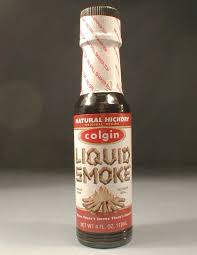
If your recipe calls for a slice of bacon, instead use a Tablespoon of olive oil and a teaspoon of liquid smoke (hickory, not mesquite) for each replaced bacon slice. Don't worry that the liquid smoke smells to strong at first. It settles in cooking and works quite well.